
Summary / TLDR
Tata Technologies needed two enterprise applications designed in parallel around an early concept that was unusual for the Indian market. The work demanded a shared experience language, careful coordination, and many rounds of review before release.
The design process translated complex engineering and operational needs into clearer mobile workflows while maintaining consistency across both products.

Overview
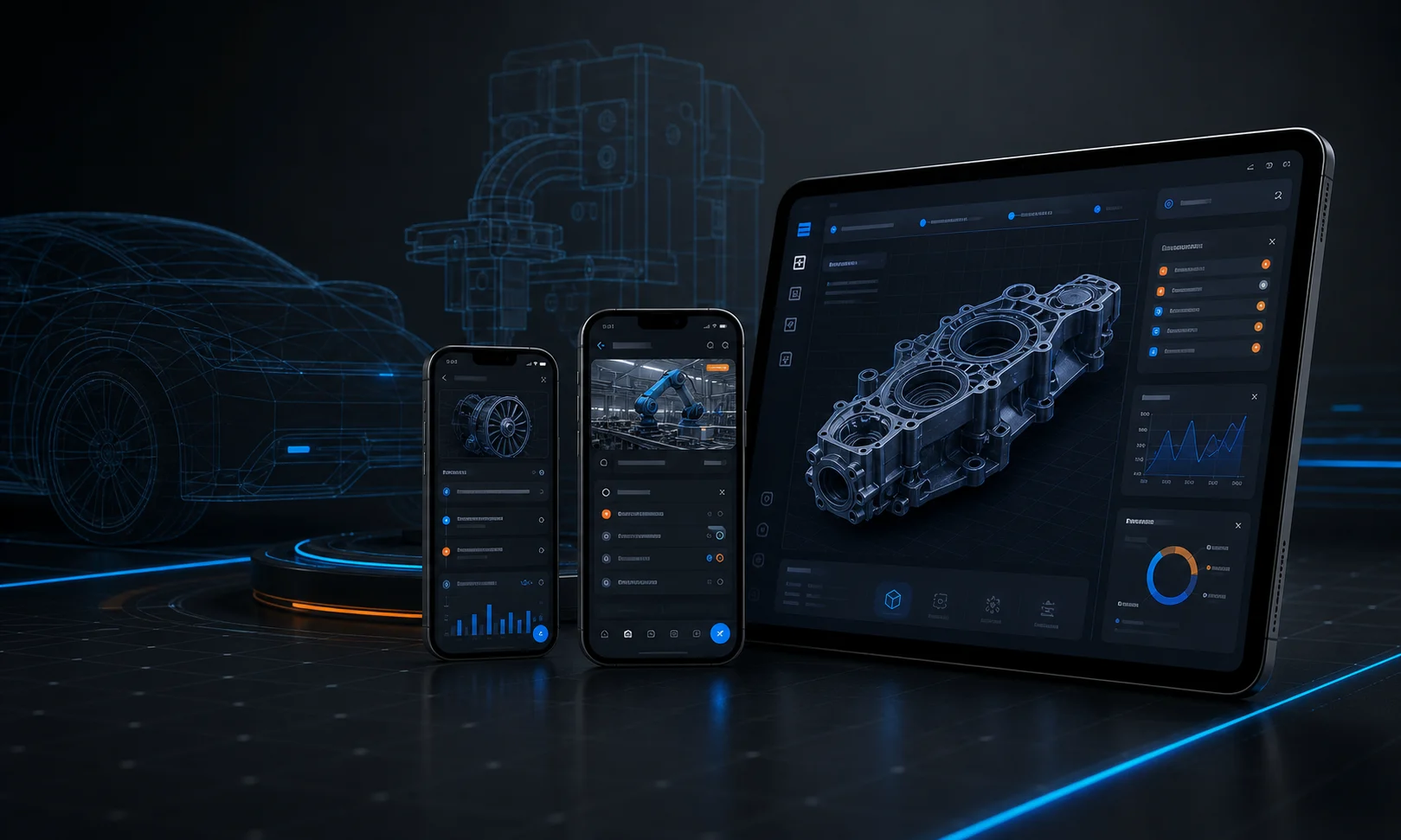
Tata Technologies is a global product engineering and digital services company serving automotive, industrial machinery, aerospace, and adjacent sectors. The application work sat within a broader mission to help manufacturers and their partners engineer, build, and operate better products.
Services provided
- Product discovery and workflow mapping
- UX and interface design for two applications
- Interactive prototyping and shared component design
- Stakeholder review and iterative release support
- Website performance and Core Web Vitals optimization
Challenges
- A new product concept: The original idea did not have an established local pattern to copy, so key interactions needed to be explored and validated.
- Two products at once: Parallel design work increased the need for shared decisions, reusable components, and coordinated delivery.
- Complex stakeholder feedback: Multiple iterations and releases were required before the final direction was ready.
- Performance expectations: The wider digital experience also needed measurable improvements to speed and Core Web Vitals.
Solution
The team established a shared design language across both applications, then moved from high-priority workflows into interactive prototypes that made review and iteration concrete.
- Mapped users, tasks, approvals, and exception paths before visual design.
- Created reusable patterns so the applications felt related without forcing identical workflows.
- Used staged reviews and release cycles to resolve ambiguity early and steadily refine the experience.
- Addressed website performance through a focused Core Web Vitals audit and optimization work.
Results
The engagement produced a more coherent experience across both applications and a practical system for carrying design decisions into future releases.
- A shared interface foundation across parallel products
- Clearer workflows for complex engineering and operational tasks
- Reduced design drift through reusable components and review checkpoints
- A reported 50% improvement in website speed and performance after Core Web Vitals work
Coordinating a complex product portfolio? Let’s create the shared system behind every experience.